If there is water leaking from the ceiling in your apartment, the most important step is to act immediately to protect your safety and prevent damage. Turn off electricity in the affected area if water is near lights or outlets, move away furniture and belongings, place containers to catch the water, and contact your landlord or emergency maintenance right away.
Water leaks often come from burst pipes, plumbing issues, or overflow from the unit above, so quick reporting and documentation are important.
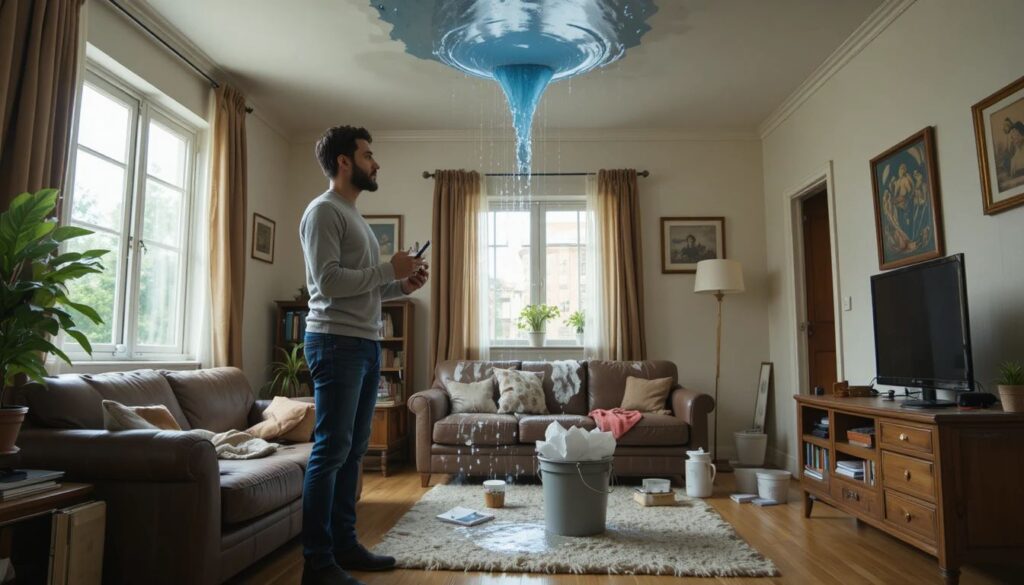
Immediate Actions For Safety:-
A ceiling leak can quickly turn into a serious problem if not handled properly. The first priority is your safety but not just stopping the water.
Start by checking if the water is near any electrical points. If yes, go to the breaker box and switch off electricity for that area. Water and electricity together can be dangerous, so avoid touching wet switches or appliances.
Next, try to contain the water. Place buckets, pots, or any available containers under the leak. Use towels or clothes to soak up extra water around the area. If water is spreading fast, focus on limiting damage rather than cleaning everything immediately.
Move furniture, electronics, carpets, and personal items away from the leak. Even small leaks can damage belongings quickly.
If you live in an apartment building, it is also helpful to check with neighbors above you if it is safe to do so. Many ceiling leaks come from:
- Burst or leaking pipes.
- Overflowing sinks or bathtubs.
- Washing machine or dishwasher issues.
Handling The Ceiling Itself:-
If the ceiling is starting to bulge or sag, it may be holding a large amount of water. In such cases, professionals often suggest carefully creating a small drainage point so water can flow out in a controlled way.
However, this should be done with caution. Only do this if the ceiling looks ready to collapse and water is pooling heavily. Otherwise, wait for maintenance or emergency help.
Never try to repair the ceiling yourself, as the real cause is usually inside pipes or building systems. For official U.S. guidance on rental safety and scams, you may also refer to the Federal Trade Commission (FTC).
Contact Your Landlord or Maintenance Immediately:-
Once you have handled the immediate safety steps, inform your landlord or building management right away. Most rental agreements in the USA require tenants to report water damage immediately.
If your building has an emergency maintenance number, use it. If not, send a clear message or call and describe:
- Where the leak is happening.
- How fast water is coming in.
- Whether electricity is affected.
- Any visible damage.
Quick reporting helps prevent bigger structural damage and supports repair responsibility discussions later.
If you want to understand your rights in similar urgent situations, you may also read: Tenant Rights When Landlord Sells Property.
Document The Damage:-
Before cleaning everything, take photos and videos of:
- The ceiling leak.
- Water pooling.
- Damaged furniture or items.
- Any visible stains or cracks.
This documentation is important for:
- Security deposit claims.
- Insurance claims (if you have renter’s insurance).
- Proof for landlord repairs.
Try to capture the timeline as well, like when the leak started and how it changed.
What To Do Next (After Immediate Control):-
After the situation is stable and maintenance is contacted:
- Keep monitoring the leak in case it worsens.
- Dry the area as much as possible using fans or ventilation.
- Avoid using the affected room if ceiling damage continues.
- Follow up with landlord if repairs are delayed.
If water damage is severe, ask about professional inspection for mold prevention, because moisture trapped inside ceilings can lead to mold growth over time.
Common Mistakes Tenants Make:-
Many tenants unintentionally make the situation worse. Avoid these mistakes:
- Ignoring small leaks thinking they will stop on their own.
- Delaying landlord notification.
- Forgetting to turn off electricity.
- Throwing away damaged items before documenting them.
- Trying to fix plumbing issues themselves.
Even small leaks can become structural problems if ignored.
Final Thought:-
A water leak from an apartment ceiling should always be treated as an urgent issue. The key steps are simple: ensure safety first, control the water, report it immediately, and document everything. In most cases, the cause is a plumbing issue above you or within the building system, so professional repair is necessary.
Quick action not only reduces damage but also protects you from unnecessary repair costs and long term issues like mold or ceiling deterioration.