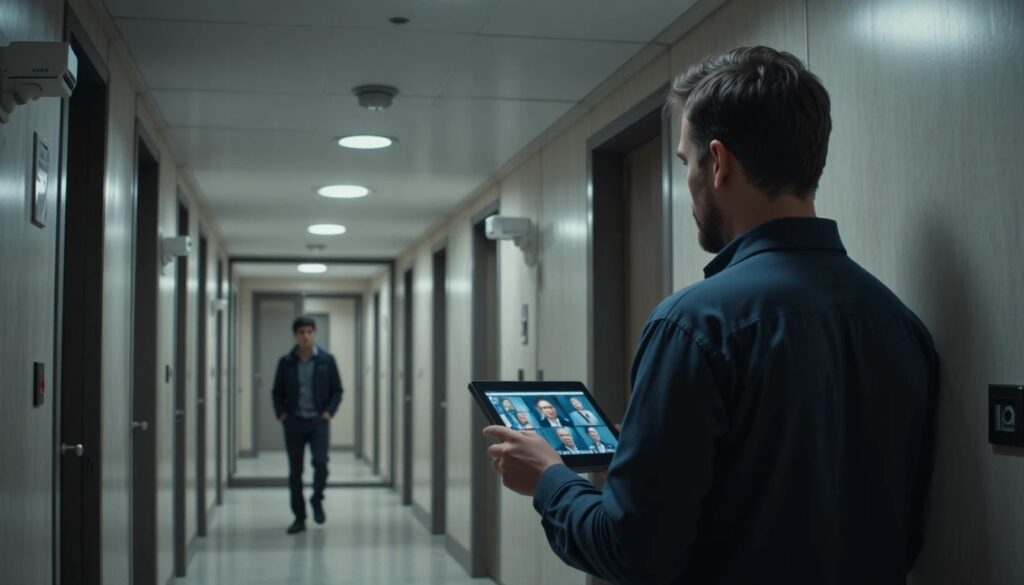
A landlord can use security cameras in common areas of a building like entrances, hallways, or parking areas, but it is generally not OK or legal to place cameras inside your private rented home or in any space where you have a strong expectation of privacy.
State-Specific Explanation:-
In the United States, landlords are allowed to use security cameras for safety and property protection, but there are strict privacy limits.
Allowed areas (generally legal):-
Landlords can install cameras in:
- Building entrances;
- Hallways and staircases;
- Elevators;
- Parking lots;
- Shared lobbies or common spaces.
These areas are considered shared spaces, so tenants do not have full privacy rights there. Cameras are usually used for safety, theft prevention, and monitoring building damage.
Not allowed areas (generally illegal):-
Landlords cannot place cameras in:
- Inside your rented apartment or house.
- Bedrooms or bathrooms.
- Inside private living spaces.
- Areas where tenants expect full privacy.
Even pointing a camera directly into windows or private indoor spaces is usually treated as a serious privacy violation.
For general tenant rights information in the USA, you can refer to the official government resource.
Exceptions:-
There are very limited exceptions where monitoring may be allowed, but they are still highly restricted:
- Cameras in common areas for security purposes.
- Temporary surveillance approved by law enforcement (rare cases).
- Systems installed before tenancy, but still must not invade privacy.
- Consent based monitoring (only if tenant clearly agrees in writing).
Even in these cases, landlords cannot use cameras to monitor private behavior inside your home.
Important point: Audio recording laws are often stricter than video laws, and many states require consent from at least one or all parties for recording sound.
Real Scenarios:-
Here are simple examples to understand what is OK and what is not:
Example 1: Hallway camera:-
Your building has cameras in hallways to prevent theft. This is generally legal.
Example 2: Camera facing apartment door:-
A camera is placed in the hallway pointing at your door. This is usually allowed if it only records common areas.
Example 3: Camera inside apartment:-
You discover a camera inside your living room or bedroom. This is almost always illegal and a serious privacy violation.
Example 4: Camera pointed through window:-
A landlord installs a camera in the yard that directly records inside your bedroom window. This may be considered illegal surveillance depending on state laws.
Example 5: Hidden camera in bathroom:-
This is strictly illegal in all normal circumstances and can lead to criminal charges.
What To Do Next:-
If you suspect inappropriate surveillance, take these steps:
1. Confirm location of cameras:-
First, check where the camera is actually placed:
- Is it in a shared space or private space?
- Does it point into your home?
2. Document evidence:-
Write down:
- Location of camera.
- Date you noticed it.
- Photos or videos if possible.
- Any communication with landlord.
3. Review your lease:-
Check if your lease mentions security systems or surveillance. Even if it does, it cannot override privacy laws for private living spaces.
4. Communicate in writing:-
Send a calm but firm message asking:
- Why the camera is installed.
- What area it is recording.
- Whether it is recording inside private space.
5. Report if necessary:-
If cameras are inside private areas:
- Contact local tenant authority.
- Report to police (especially hidden cameras).
- Seek legal advice or tenant organizations.
Common Mistakes:-
Many tenants make these errors:
- Assuming all cameras are illegal (they are not in common areas).
- Ignoring cameras even when pointed at private spaces.
- Not collecting evidence early.
- Confronting landlord aggressively without proof.
- Thinking ownership gives unlimited surveillance rights.
Remember that landlords can protect property, but they cannot invade privacy.
Key Understanding:-
A simple way to look at this is that you are expected to have privacy inside your home, especially in places like your bedroom and bathroom.
So, security cameras are usually fine in shared building areas like hallways or entrances because they are meant for safety.
But if any camera is placed inside your private living space or used in a way that feels like you are being watched at home, it becomes a serious privacy concern and something you should not ignore.
If you want to understand more about landlord behavior and privacy concerns, you can also read: Landlord Has Key And Enters Anytime What To Do?
This helps you understand how privacy rights apply when landlords try to access or monitor your home.
Final Thought:-
Security cameras in rental buildings are not automatically illegal, but their location matters a lot. Common areas like hallways are usually fine for safety, but private spaces inside your home are strongly protected by law. If surveillance crosses into your personal living space, it is no longer a security issue, it becomes a serious privacy violation, and you have the right to take action.