Can a landlord enter your apartment when you are not home or without notice? In most U.S. states, the answer is no, not without proper notice. A landlord cannot legally enter your apartment just because you are not there.
They must usually give advance notice (commonly 24 to 48 hours), have a valid reason, and enter at a reasonable time. If a landlord enters your apartment without notice while you are not home, it may be a violation of your privacy rights and lease agreement.
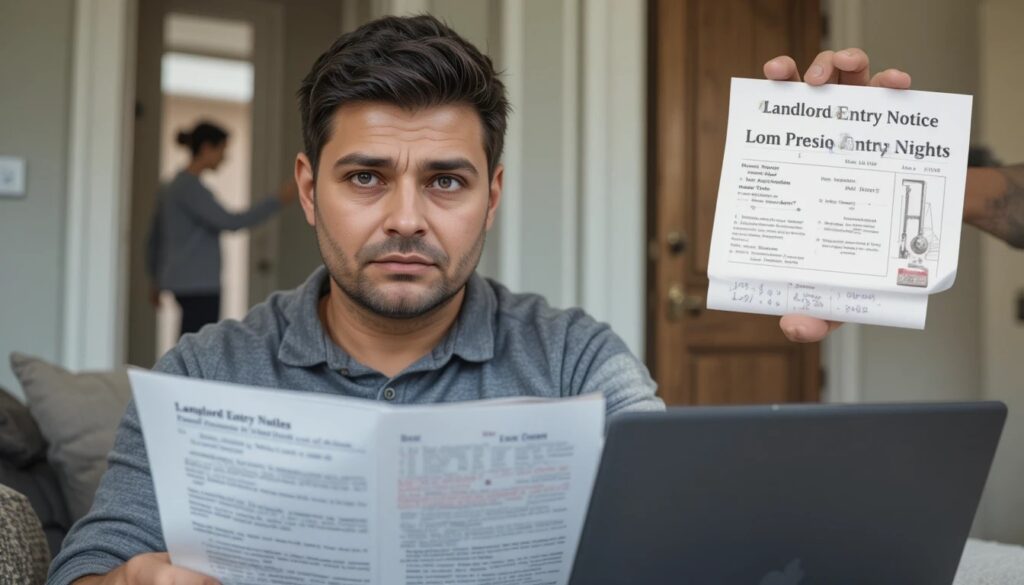
State-Specific Explanation:-
In the United States, landlord entry rules are mainly decided by state laws, but the basic principle is the same everywhere.
Once you rent an apartment, you get the right to exclusive use and privacy inside that home. This means the landlord cannot enter freely, even if they own the property.
Most states require:
- Advance notice before entry (usually 24 to 48 hours).
- A valid reason for entry.
- Entry during reasonable hours (daytime).
Even in states without strict written rules, the law still protects tenants through the concept of quiet enjoyment, meaning you have the right to live peacefully without interference.
For official information on tenant rights and landlord responsibilities, visit the U.S. Department of Housing and Urban Development (HUD).
Can Landlord Enter When I Am Not Home:-
Yes, a landlord can enter your apartment when you are not home, but only if they follow proper legal steps.
This means:
- They must give proper notice before entering.
- The reason must be valid (not random or personal).
- The timing must be reasonable.
For example, if your landlord gives 24-hour notice for a repair visit, they may enter even if you are not present.
However, if they enter without notice while you are away, that is usually not allowed and may be considered a violation of your rights. If this has happened more than once, it’s also helpful to understand Scared Of Landlord Entering Apartment: What To Do?
Valid Reasons For Landlord Entry:-
Landlords cannot enter without a reason. Common legal reasons include:
- Repairs or maintenance work.
- Property inspections.
- Showing the apartment to new tenants or buyers.
- Checking safety issues.
If the landlord enters without any clear reason, it may be considered improper or illegal.
Exceptions (When Notice Is Not Required):-
There are a few situations where landlords can enter without notice:
- Emergency situations (fire, gas leak, flooding, etc.).
- Tenant permission (if you agreed to entry).
- Legal or court order (rare cases).
In emergencies, landlords can enter immediately to prevent damage or danger. Outside these situations, entering without notice is usually not allowed.
Real Situations Tenants Face:-
Here are common real-life cases:
- Landlord entered while you were not home without telling you: This is one of the most common complaints and is usually not legal.
- Maintenance staff entered without notice: Even workers must follow the same notice rules.
- Landlord uses key to enter anytime: Having a key does not give unlimited access.
- You return home and notice things moved: This can feel unsafe and is a serious privacy concern.
- Repeated entries without notice: This may become harassment if it happens often.
These situations show why understanding your rights is important.
What To Do If Landlord Enters Without Notice:-
If your landlord entered your apartment without notice while you were not home, take these steps:
- Check your lease agreement:- Look for rules about entry and notice.
- Document everything:- Write down dates, times, and what happened. Take photos if needed.
- Contact your landlord:- Clearly explain that you expect proper notice before entry.
- Send written communication:- Use email or written notice for proof.
- Set boundaries:- Tell them entry without notice is not acceptable unless it is an emergency.
- Report if it continues:- Contact tenant support organizations or legal help if the problem continues.
Taking action early helps prevent future issues.
When It Becomes a Serious Problem:-
The situation becomes more serious if:
- The landlord repeatedly enters without notice.
- You feel unsafe or uncomfortable in your home.
- Your belongings are disturbed.
- The landlord ignores your complaints.
In such cases, it may be considered a violation of your privacy rights or lease agreement, and legal action may be possible.
Common Mistakes Tenants Make:-
Avoid these mistakes:
- Thinking landlords can enter anytime when you are not home.
- Not checking the lease for entry rules.
- Ignoring repeated violations.
- Not keeping proof of incidents.
- Not communicating clearly with the landlord.
Understanding your rights helps you stay protected.
Final Thought:-
Even if you are not home, your apartment is still your private space. A landlord cannot treat it like an open property. They must respect your rights, give proper notice, and have a valid reason before entering.
If your landlord entered your apartment without notice while you were not home, do not ignore it. Take simple steps, communicate clearly, and protect your peace of mind.