If your apartment is too hot in summer, your tenant rights depend on your lease and local housing laws, but in most cases landlords must still provide a safe and habitable living space. If air conditioning is included in your lease, the landlord must repair it if it stops working.
Even if AC is not provided, extreme heat that makes the apartment unsafe may still violate habitability standards. You should document temperatures, notify your landlord in writing, and request repairs or cooling solutions.
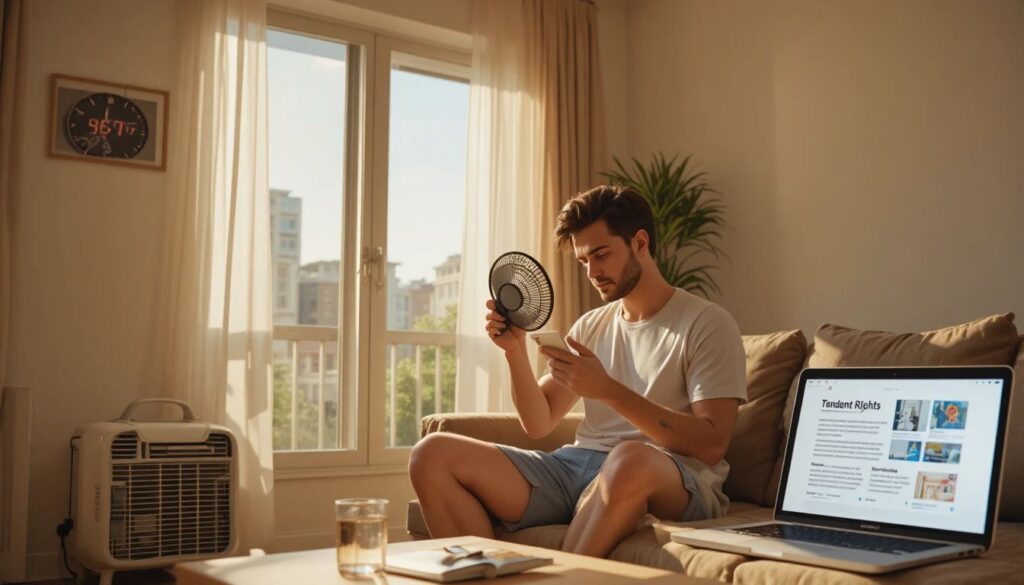
Understanding Your Rights:-
In the United States, landlords are generally required to maintain a habitable home, meaning the property must be safe for living. However, air conditioning is not automatically required in every state.
Your rights usually depend on:
- What is written in your lease agreement.
- Local or city housing codes.
- Whether extreme heat makes the apartment unsafe.
In some cities or states, repeated indoor temperatures above a certain level (often around 80–85°F / 27–29°C) may be considered a health or safety issue, especially for elderly tenants, children, or people with medical conditions. Even if AC is not legally required, landlords cannot ignore conditions that make the home unsafe. For official information on tenant rights in the United States, you may also refer to the U.S. government guide here.
Check Your Lease First:-
Start by reviewing your rental agreement carefully.
Look for:
- Whether air conditioning is included as an amenity.
- Whether the landlord is responsible for HVAC systems.
- Any maintenance clauses related to heating/cooling systems.
If AC is listed and stops working, the landlord is usually responsible for repairing it in a reasonable time.
Document The Temperature:-
One of the most important steps is proof.
You should:
- Use a thermometer to record indoor temperatures.
- Take photos or videos showing readings.
- Record dates and times (especially during peak heat hours).
This helps if you later need to request repairs, rent reduction, or file a complaint.
Notify The Landlord in Writing:-
Always report the issue in writing (email or message is fine, certified mail is stronger).
Your message should include:
- Current indoor temperatures.
- Description of the heat problem.
- Request for repair or solution.
- Dates when the issue started.
Written notice creates a legal record and shows you gave the landlord time to respond.
Possible Landlord Responsibilities:-
Depending on the situation, landlords may be responsible for:
- Repairing broken AC systems (if provided).
- Fixing ventilation or HVAC issues.
- Allowing safe installation of window AC units (in some cases).
- Addressing building wide cooling failures.
If the heat becomes extreme and unsafe, it may be considered a habitability issue, even without AC in the lease.
What You Can Do If Landlord Does Nothing:-
If the landlord ignores your request, tenants may have options depending on local laws:
1. Request Repairs Again (Formal Notice):- Send a second written notice stating urgency.
2. Contact Housing Authorities:- Local code enforcement or housing departments may inspect unsafe living conditions.
3. Rent Reduction or Legal Remedies:- In some situations, tenants may seek:
- Rent reduction for unlivable conditions.
- Repair and deduct options (where allowed).
- Lease termination in severe cases.
Always check local rules before taking financial action.
Practical Ways To Stay Safe During Heat:-
While legal steps are ongoing, you should also try to reduce indoor heat:
- Close blinds or curtains during the day.
- Use fans to improve air circulation.
- Open windows at night if outdoor air is cooler.
- Avoid heat-generating appliances during peak hours.
- Stay hydrated and use cooling centers if necessary.
If the heat becomes dangerous, public cooling centers (libraries, community centers) may provide relief.
Common Mistakes Tenants Make:-
Avoid these errors, as they can weaken your case:
- Not measuring or documenting temperature.
- Only complaining verbally.
- Waiting too long to report the issue.
- Making repairs without landlord approval.
- Ignoring lease terms about AC responsibility.
Final Thought:-
A too hot apartment in summer is not just uncomfortable, it can become a health and habitability issue. While air conditioning is not always legally required, landlords still must maintain safe living conditions. If you want to understand more about repair duties in rentals, you may also read: What Repairs Landlord Is Responsible For?
The most important steps are to document the heat, notify the landlord in writing, and understand your local tenant protections. Quick action and proper records can make it much easier to get repairs, compensation, or other solutions if the problem continues.