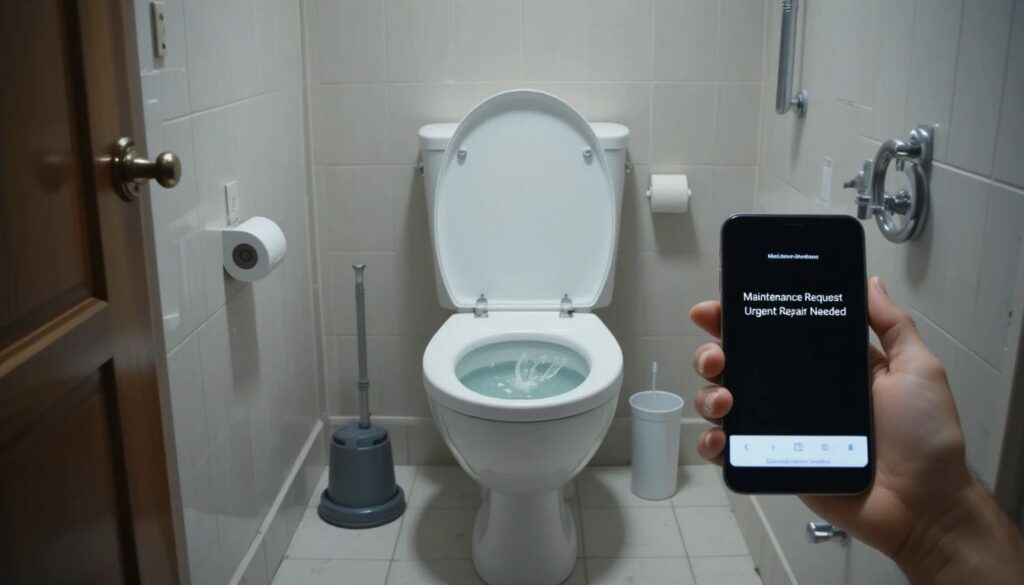
If your toilet is not working in a rental apartment, it is usually treated as an urgent or emergency repair, especially if it is the only toilet in your home. You should first try basic fixes like plunging or checking the water supply, but you must also contact your landlord immediately in writing.
In most cases, landlords are responsible for repairing toilet issues caused by normal wear and tear. However, if the damage was caused by tenant misuse (like flushing non-flushable items), the tenant may be charged for repairs.
General Explanation:-
In the United States, a working toilet is considered a basic habitability requirement. This means your rental unit must have functioning plumbing that allows safe and sanitary living conditions.
Under general housing standards, landlords are required to maintain essential plumbing systems. The U.S. Department of Housing and Urban Development explains that landlords must provide safe and livable housing, which includes working sanitation facilities like toilets.
Because toilets are essential for hygiene and daily life, a broken toilet, especially when it is the only one in the apartment, is often treated as an urgent repair issue that should be handled quickly.
Immediate Things To Try Before Calling Landlord:-
1. Plunge the toilet:-
- Use a plunger to remove blockages.
- Make sure it fully covers the drain opening.
2. Check the tank:-
- Ensure water is filling properly.
- Check if the flapper is sealing correctly.
3. Use hot water and soap:-
- Pour warm (not boiling) water and dish soap.
- Helps break down minor clogs.
4. Turn off water if overflowing:-
- Locate the shut off valve behind the toilet.
- Turn it clockwise to stop flooding.
These steps can fix simple clogs without needing repair.
Tenant Vs Landlord Responsibilities:-
Landlord responsibilities:-
Usually covers:
- Pipe blockages inside plumbing system.
- Broken flush mechanism.
- Old or worn out toilet parts.
- Sewer or drainage issues.
- Repeated clogs not caused by misuse.
Tenant responsibilities:-
May apply if:
- Foreign objects were flushed (wipes, toys, sanitary items).
- Damage caused by misuse or negligence.
- Improper cleaning products caused damage.
In most normal situations, wear and tear issues are the landlord’s responsibility.
Real Scenarios:-
- A toilet stops flushing properly due to a worn out flapper. The landlord sends a plumber and fixes it the same day.
- A tenant flushes wipes and causes a blockage. The landlord repairs it, but charges the tenant for misuse.
- In a one bathroom apartment, the toilet overflows and becomes unusable. The landlord treats it as an emergency repair and sends help within hours.
These situations show that cause and urgency both matter.
What To Do Next:-
1. Report immediately in writing:-
Send an email or message including:
- Date of issue;
- Description of problem;
- Urgency (especially if only toilet).
2. Document everything:-
- Take photos or videos.
- Save communication with landlord.
3. Request emergency repair:-
If it is your only toilet, clearly state it is urgent.
4. Follow up if delayed:-
If no response:
- Contact property manager again.
- Escalate to housing authority if needed.
The U.S. Department of Housing and Urban Development tenant rights guidance supports the principle that landlords must maintain safe and livable housing conditions, which includes functioning plumbing systems.
Common Mistakes:-
- Waiting too long before reporting.
- Not trying basic clog fixes first.
- Not documenting the issue.
- Using harsh chemicals that may damage plumbing.
- Not stating urgency when it is the only toilet.
If you are dealing with other urgent appliance issues in your rental, you may also find this helpful: Broken Fridge In Apartment: How Long To Fix?, which explains landlord response times, repair expectations, and tenant rights when essential appliances stop working.
Final Thought:-
A non-working toilet in a rental is not just an inconvenience, it is usually a serious maintenance issue that affects habitability. While simple clogs can often be fixed quickly, landlords are generally responsible for proper repairs when plumbing systems fail due to normal use. The key is to act fast, document everything, and communicate clearly, especially if it is your only bathroom.