If your landlord is not changing light bulbs, the first step is to check your lease agreement because most standard bulbs are usually the tenant’s responsibility. However, if the bulb is in a hard to reach place, part of a fixed fixture, or in a common area (like hallways or staircases), then the landlord is generally responsible.
You should send a written request, document the issue, and escalate it if it involves safety or shared spaces. In many cases, simple communication or clarification of responsibility solves the issue quickly.
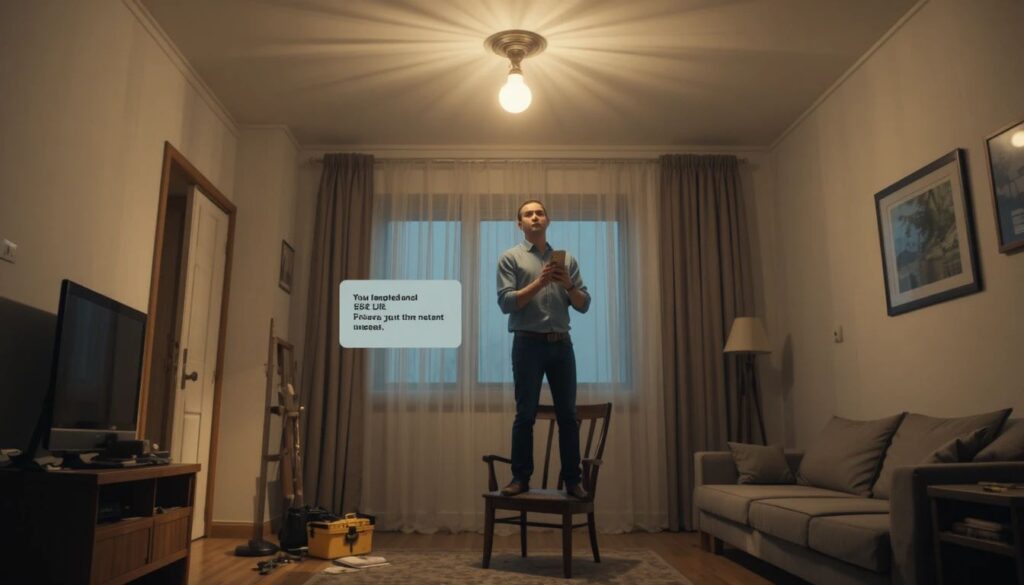
General Explanation:-
In most rental agreements in the United States, light bulbs are considered consumable items. This means tenants are usually expected to replace them when they burn out, just like batteries or basic household supplies.
However, the situation changes when the lighting is part of the building structure or shared spaces. For example:
- Hallway lights in apartment buildings.
- Staircase lighting.
- Outdoor or security lighting.
- Built-in fixtures that require special tools or access.
In these cases, the responsibility often shifts to the landlord because it affects safety, habitability, and building maintenance standards.
The U.S. Department of Housing and Urban Development requires landlords in federally assisted or public housing to maintain safe and functional living conditions, which includes proper lighting in common areas and essential fixtures. While private rentals vary, many follow similar habitability principles.
Exceptions:-
There are several situations where responsibility may not be clear:
- Normal ceiling or table lamps: Usually tenant responsibility.
- Hard to reach fixtures: May require landlord assistance for safety reasons.
- Specialty bulbs (oven, fridge, exhaust fan): Often landlord responsibility depending on lease.
- Common areas: Always landlord responsibility.
- Emergency or safety lighting issues: Must be fixed by landlord.
If the lease clearly states tenants handle all bulbs, that usually applies unless safety or accessibility becomes an issue.
Real Scenarios:-
- A tenant reports a hallway light not working for several days. The landlord replaces it because it is a shared safety area.
- A tenant asks the landlord to replace a bedroom bulb in a standard lamp. The landlord responds that it is the tenant’s responsibility under the lease.
- In another case, a kitchen exhaust light is built into a fixed appliance. The landlord repairs it because it requires technical maintenance and is part of the fixture.
These examples show that responsibility depends on location, type of fixture, and lease terms. If your landlord is also delaying basic repairs or utilities, you may find this helpful: No Electricity In Apartment: What Are My Rights?, which explains tenant rights when essential services like electricity are not provided and what steps you can take against the landlord.
What To Do Next:-
Here are practical steps you can follow:
1. Check your lease agreement
Look for terms like:
- Maintenance responsibilities.
- Consumables.
- Tenant repairs.
This is your first reference point.
2. Replace standard bulbs yourself:-
For simple bulbs, it is usually faster and cheaper to replace them directly.
3. Send a written request if needed:-
If it is a fixture or difficult location, send an email or message to your landlord. Keep it polite and clear.
4. Document the issue:-
Write down:
- Date the light stopped working.
- Type of fixture.
- Any communication with landlord.
5. Escalate if it affects safety:-
If lighting is in:
- Stairwells.
- Hallways.
- Entrances.
- Parking areas.
Then it may be a safety issue. In such cases, you can contact local housing or code enforcement authorities. Habitability standards are supported under general rental safety principles and tenant protection guidance from the U.S. Department of Housing and Urban Development, which explains that landlords must maintain safe and livable housing conditions.
Common Mistakes:-
- Assuming all lighting is landlord responsibility.
- Not checking the lease first.
- Waiting too long before reporting safety issues.
- Not using written communication.
- Forgetting to document repeated problems.
Final Thought:-
In most rentals, simple light bulb replacement is the tenant’s responsibility, but landlords must maintain lighting in shared spaces and essential fixtures. The key is to understand your lease, identify whether the issue is a personal fixture or a building responsibility, and communicate clearly. If safety is affected, it becomes more serious and should be escalated without delay.