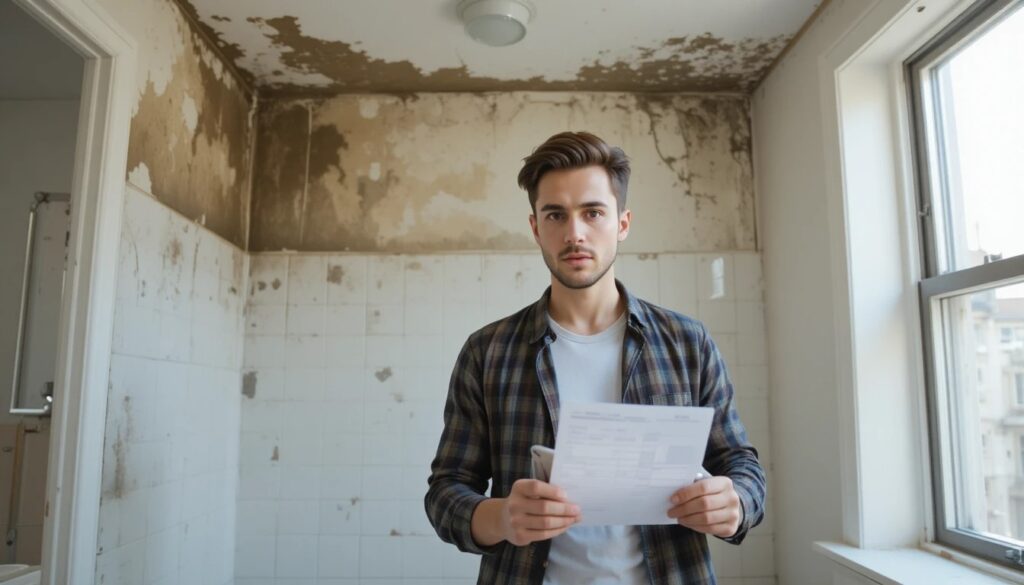
If your landlord is not fixing a mold problem, you should document it with photos, report it in writing, and give a clear deadline for repairs. If they still ignore it, you can contact local housing or health authorities because mold often violates basic habitability laws in the U.S.
General Rule in the USA:-
In the United States, landlords must provide a safe and livable home. This includes protecting tenants from dangerous conditions like mold.
Mold is not just a cleaning issue, it can become a serious health and structural problem, especially when it is caused by leaks, poor ventilation, or water damage.
In most states, landlords are required to fix:
- leaking pipes or roofs causing mold.
- moisture problems inside walls or ceilings.
- unsafe indoor air conditions.
- repeated mold growth that affects living conditions.
If mold makes the home unsafe, it may violate the warranty of habitability, which exists in almost every U.S. state.
Some states have stricter enforcement:
- California: Strong habitability rules and clear landlord responsibility for mold and safe living conditions.
- New York: Active housing inspections and strong tenant complaint systems for habitability issues.
- Florida: Mold problems are often handled under general property maintenance and repair laws.
- Texas: Tenants usually must give proper written notice to the landlord before any legal escalation or formal complaint process.
For official general tenant rights guidance in the U.S., you can refer to the U.S. Department of Housing and Urban Development (HUD). However, repair and habitability rights are mainly enforced through state and local housing laws, which may provide stronger protections depending on your location.
Exceptions:-
Not all mold cases are fully the landlord’s responsibility.
- Tenant-caused moisture (not using ventilation, excessive humidity, or poor cleaning habits).
- Minor surface mold in bathrooms that can be cleaned easily.
- Damage caused by tenant neglect or water misuse.
- Short term mold after sudden leaks being repaired immediately.
However, even in these cases, landlords must still ensure the property remains safe. If mold is linked to structural issues like leaking roofs, broken pipes, or building defects, responsibility is usually on the landlord.
Real Scenarios:-
Example 1: Hidden leak behind wall:-
A tenant notices a musty smell and dark patches on the wall. The landlord ignores it for weeks. Later, an inspector finds a hidden pipe leak causing widespread mold.
Example 2: Bathroom mold complaint:-
A tenant reports mold in the bathroom. The landlord delays repairs. The tenant sends photos and a written notice, which helps escalate the case to housing authorities.
Example 3: Health symptoms appear:-
A tenant starts experiencing coughing and allergies. Mold is later confirmed behind the kitchen cabinets due to a plumbing issue.
What To Do Next:-
1. Document everything:-
Take:
- clear photos of mold areas.
- videos showing affected rooms.
- notes about smell, leaks, or humidity.
- dates when the problem started.
2. Notify the landlord in writing:-
Send a clear message (email or certified mail):
- describe the mold problem.
- explain where it is located.
- mention possible water source.
- request urgent repair .
This creates legal proof.
3. Set a reasonable deadline:-
Give time depending on severity:
- urgent mold: a few days.
- moderate issue: 7–14 days.
4. Contact housing or health authorities:-
If no action is taken, report to:
- local health department.
- city housing inspector.
- code enforcement office.
They can inspect and force repairs if needed.
5. Consider stronger legal options:-
Depending on your state, possible actions may include:
- rent reduction for unlivable conditions.
- repair and deduct (only where legal).
- breaking the lease if home becomes unsafe.
- legal claims for damages.
Always check local laws before withholding rent.
6. Medical and safety step:-
If you feel sick:
- visit a doctor.
- keep medical records.
- document symptoms.
This can support your case if smoke or mold is affecting your health or daily living. If you also want to understand your rights in another common housing issue, you can read our article on what to do when there is no hot water in your apartment to know the clear answer and next steps.
Common Mistakes:-
- Not reporting quickly:- Mold spreads fast. Delays make it worse and harder to prove responsibility.
- Cleaning without fixing the source:- Wiping mold without repairing leaks only hides the problem temporarily.
- Not keeping evidence:- Without photos and written proof, it is harder to force landlord action.
- Ignoring inspection help:- Local inspectors often solve the issue faster than direct disputes.
Final Thought:-
A landlord ignoring mold is not just a maintenance issue, it can become a serious housing safety problem. The strongest protection is to act early, document everything, and involve local housing or health authorities if needed. In most U.S. states, mold linked to structural issues is treated as a clear habitability violation, meaning tenants do have legal options to force action.