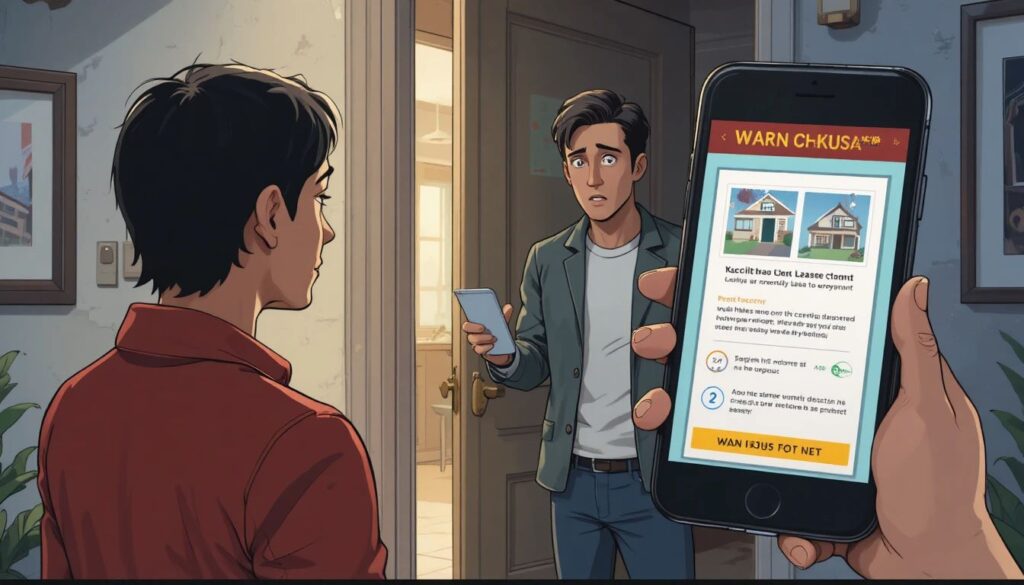
If a fake landlord is asking you for money, stop immediately and do not send any payment. Rental scams often happen when someone pretends to be the landlord or property manager and asks for a deposit, application fee, or advance rent before you have properly verified the property.
Do not trust pressure like send money today or you will lose the apartment. A real landlord should be able to show the property, explain the lease clearly, and prove that they have the right to rent it. If you have already paid, contact your bank or payment app immediately and report the fraud as quickly as possible.
State-Specific Explanation:-
Rental scam laws and reporting systems can vary, but the basic rule is the same across the USA i.e. never pay before verifying the landlord and the property.
A fake landlord scam usually works like this:
- A scammer copies a real rental listing.
- They offer the home at a very low price.
- They ask for a deposit before you see the inside.
- They create urgency and pressure.
- They refuse in-person meetings or proper paperwork.
Common excuses include:
- “I am out of town”;
- “I am in the military”;
- “I need the deposit today”;
- “Many people want this place, pay now to hold it”.
Many scammers ask for wire transfers, gift cards, crypto, or payment apps that are hard to reverse. Before paying anything, verify ownership through public records, property management offices, or trusted listing platforms.
If the person also claims they can evict current tenants quickly, read our article on What Happens After Eviction Notice? to understand how real eviction works.
Exceptions:-
Not every unusual rental situation is a scam, but warning signs matter. For example, some landlords may use agents or property managers instead of meeting personally. That can be normal if they provide proper documents and verified company details.
However, refusing to show the property, avoiding written leases, or demanding cash without proof are major warning signs. Another red flag is when the rent is far below normal market prices. If it looks too good to be true, it often is. Scammers may also steal photos from real listings, so seeing online pictures alone is not enough.
Real Scenarios:-
Scenario 1: Deposit before viewing:-
Sarah finds a cheap apartment online. The landlord says he is traveling and asks for a deposit first. She refuses, checks public records, and discovers the real owner never listed the property.
Scenario 2: Money already sent:-
James sends an advance payment through a payment app. Later, the contact disappears. He quickly contacts his bank, reports the fraud, and files a complaint to try to recover the money.
Scenario 3: Fake urgency:-
Lisa is told she must pay within one hour or lose the apartment. She pauses, checks the listing platform, and finds the same property reported as a scam by other users.
What To Do Next:-
- First, stop communication and do not send more money.
- Second, save screenshots of messages, emails, payment requests, and listing details.
- Third, report the fake listing to the website or app where you found it.
- Fourth, if money was sent, contact your bank, card company, or payment platform immediately.
- Fifth, report the scam to law enforcement and fraud reporting agencies.
If you shared personal documents like your ID card, passport, driver’s license, bank details, or Social Security Number, take extra steps immediately. Contact your bank, monitor your accounts for unusual activity, change important passwords, and consider placing a fraud alert on your credit file. Scammers sometimes use rental applications to steal identities, not just deposits. If the scam started with an advance payment request, read our article on Apartment Scam Asking For Deposit Before Viewing to understand the warning signs.
In the USA, you can report rental fraud through the Federal Trade Commission here. The FTC collects fraud complaints about fake landlords, rental scams, identity theft, and payment fraud. Reporting helps create an official record of the scam and may also help protect other renters from the same fraud.
Common Mistakes:-
- One common mistake is paying a deposit before seeing the inside of the property.
- Another mistake is trusting only photos and text messages without checking ownership.
- Some renters ignore strange payment requests like gift cards, crypto, or urgent wire transfers.
- Others believe pressure tactics and rush payment because they fear losing the deal.
- Another mistake is sending personal documents too early. You should not share sensitive identification or banking details until you confirm the landlord and property are real.
- Not keeping proof of messages and payments also makes recovery harder later.
Final Thought:-
A fake landlord asking for money is a serious rental scam, and fast action matters. Never pay before verifying the property, the landlord, and the lease details.
If something feels rushed, secretive, or too cheap, slow down and check carefully. Protecting yourself early is much easier than trying to recover stolen money later.